What TV Gets Wrong About Informed Consent

“Everybody lies.”
– Dr. Gregory House
It’s one of the most recognizable lines, albeit shows, ever.
And that’s precisely why you probably already know the drill: House walks into the room with the bedside manner of a chainsaw, spends 45 seconds explaining a procedure no normal human could possibly process, throws in a healthy dose of “you might die,” and somehow a consent form magically appears with a signature on it.
Grey’s Anatomy isn’t all that different, really.
The music swells. Meredith delivers an emotional speech about hope. The patient nods through tears. Someone says they’re ready, and signatures aren’t really a point of consideration.
Chicago Med. The Good Doctor. ER. Pick your favorite. Each of them says: “This is risky. You may die. Sign here.” (Ugh.)
To be fair, television has 42 minutes to solve a medical mystery, save the patient, and squeeze in at least two relationship crises. Nobody wants to spend eight of those minutes watching someone explain radiation therapy, answer questions about side effects, and review a consent form line by line. I mean, that’s just not good for business.
In reality, informed consent is one of the most important conversations in a patient’s care journey (that should ideally take more than a minute its prescribed to on TV) – and one of the easiest to misunderstand.
What We’ve Learned NOT To Do From TV
eConsent focused on completion instead of comprehension – a big no no.
Interestingly, one of House M.D.’s most thought-provoking episodes is literally titled “Informed Consent.” The debate isn’t about paperwork or signatures. It’s about whether the patient truly understands the consequences of saying yes or no – and whether physicians should respect a decision they don’t agree with.
That question is just as relevant today.
Too often, success is measured by whether a patient completed the form.
We think the better question is: Did they understand it?
A signature tells you the paperwork is finished. It doesn’t tell you whether the patient feels prepared for what’s next.
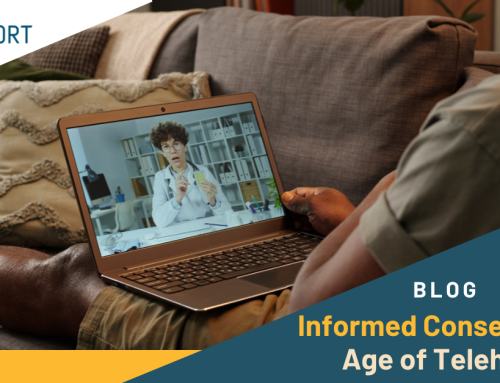
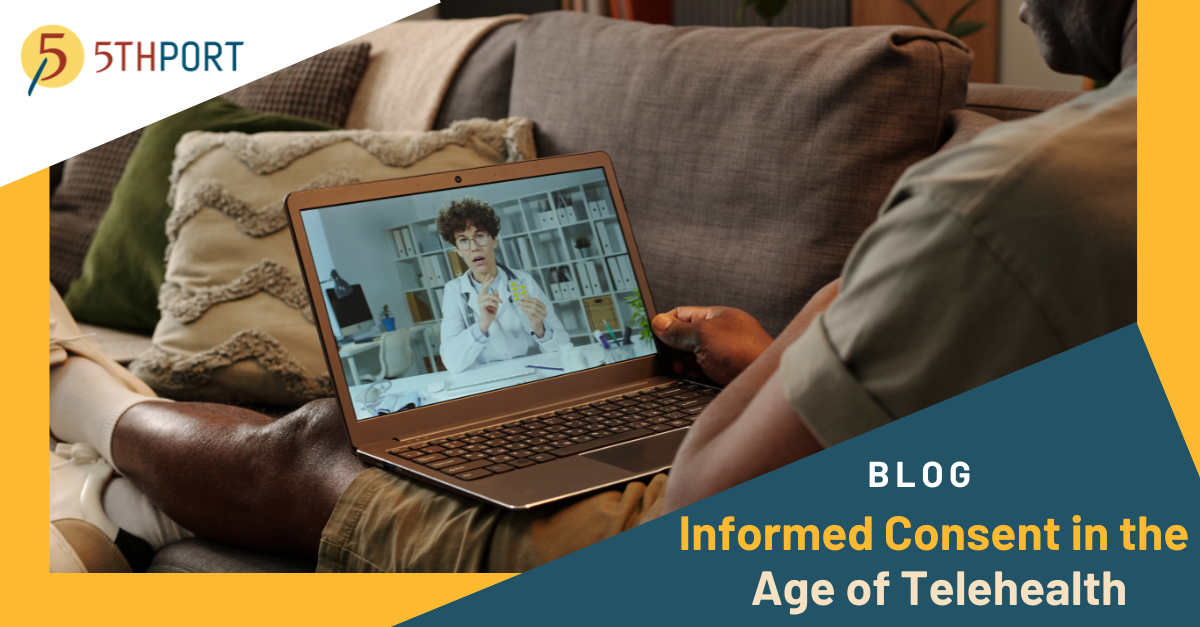
That’s why 5thPort puts patient education first. Patients can watch educational videos before their appointment, revisit information as many times as they need, learn in their preferred language, and complete teach-back activities that reinforce key concepts before they’re asked to sign.
Informed consent only occurring during an appointment – not before it.
Imagine being asked to make an important decision while you’re anxious, processing a new diagnosis, and trying to remember everything your physician just said.
That’s the reality for many patients.
One of Grey’s Anatomy’s most memorable episodes, “Silent All These Years,” showed that consent isn’t something you ask for once. Throughout the episode, physicians repeatedly pause, explain what’s happening, and ask permission before every step of a sensitive examination. The message is simple: consent is a conversation, not a checkbox.
The same principle should apply long before a procedure.
Technology being a substitute for the human element.
One of the reasons House M.D. worked so well was the contrast between House and Wilson.
House could diagnose almost anything, but Wilson often helped patients process what those diagnoses actually meant. One excelled at solving the medical puzzle. The other excelled at helping people through it.
Real healthcare needs both.
Technology shouldn’t make the physician-patient conversation better.
When patients come into the appointment already understanding the basics, providers spend less time repeating information and more time discussing what matters most to that individual patient.
The goal isn’t fewer conversations, it is those that provide more value to both providers and patients.
It’s only about collecting signatures.
Collecting a signature is a task. Building knowledge and confidence is an outcome.
Great eConsent helps patients understand their diagnosis, know what to expect, remember important instructions, and feel more prepared for the next step in their care.
Patients become more confident, and providers operate more efficiently and at top-of-license.
—
“Everybody lies.” That was House’s North Star.
We’d argue something different: Everybody is trying to absorb life-changing information while navigating fear, uncertainty, and decisions they never expected to make.
That’s a LOT to ask of anyone.
Informed consent was never about ending with a signature, it was meant to end with understanding.
Technology can’t replace the trust between a patient and their care team. It can’t answer every question, ease every fear, or make every decision easier.
But it can give patients the time to learn at their own pace. It can reinforce what was discussed in the exam room. It can help families understand alongside them. And it can make sure that when the conversation does happen, patients aren’t hearing it for the first time.
Maybe that’s what medical dramas leave on the cutting room floor. Not the surgery. The second conversation. The questions that come afterward. The moment a patient finally says, “Okay… I understand now.”