Streamlining Healthcare Starts With Patient Communication: Here’s How We Do It At 5thPort
Healthcare is investing more in technology than ever before. AI is part of that shift, but the bigger story is this: healthcare systems are looking for ways to work smarter, reduce strain on staff, and improve how patients move through care.
And yet, if you look closely at how most hospitals operate today, one thing stands out: there is an overabundance of technology.
The average U.S. hospital runs on dozens of software systems, often spending close to $9–10 million a year on IT (Becker’s Hospital Review).
A surprising amount of that is tied to one area: how hospitals communicate with patients. Education tools. Messaging platforms. Appointment reminders. eConsent systems. Documentation tracking. Audit logs.
Each one was added for a good reason, but over time it stops working the way it was intentionally designed to.
—
For care teams, this shows up in small but constant ways: Logging into multiple systems. Repeating the same steps in different places. Saying the same things to patients (over and over again). Switching between tools to complete what should feel like one workflow.
For IT teams, it means maintaining integrations and troubleshooting when things don’t connect the way they should. In fact, over 40% of healthcare organizations cite integration and interoperability as a major challenge (KLAS Research).
And for patients: it often means receiving information in fragments. A conversation during a visit. A video sent much later than it’s actually required to. A reminder from another system. A consent form somewhere else. A follow-up message that may or may not connect back to everything else.
The information is there. But it doesn’t always come together in a way that feels clear or complete.
But this is precisely where there is an opportunity ripe for the taking.
—
When communication is unified, something important happens: patients start to understand and really inculcate information presented to them.
There’s a reason this matters. Studies show that patients forget between 40% and 80% of medical information immediately after a visit, and nearly half of what they do remember is incorrect (Kessels, 2003).
That gap is a byproduct of how information is delivered, and the exact role 5thPort is designed to play.
Instead of relying on multiple systems to handle education, reminders, consent, follow-up, and documentation, 5thPort brings those pieces together into one continuous experience.
That includes:
- Delivering patient education in a clear, consistent way
- Reinforcing key information after the visit
- Confirming understanding through teach-back
- Managing reminders and follow-ups
- Handling eConsent and documentation tracking
In many hospitals, that replaces A LOT of tools with a single system.
5 benefits of 5thPort as a single system:
- Fewer vendors to manage
- Less time spent training staff across multiple platforms
- Fewer integrations to maintain
- Workflows that feel more natural and connected
- Understanding is measurable vs something that is often left to chance
Let’s talk about AI patient education with 5thPort, because it plays a huge role.
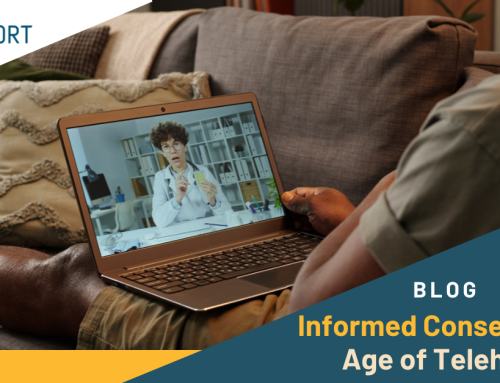
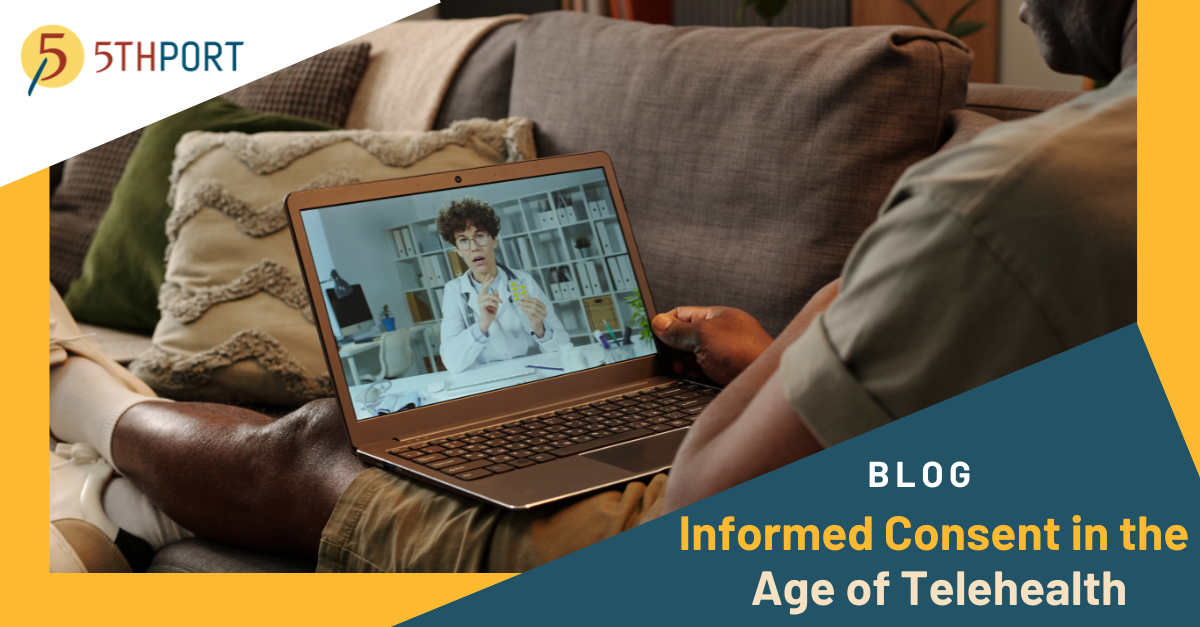
With 5thPort, patients don’t just receive written instructions or static videos. They receive AI avatar-led video explanations OF THEIR OWN PHYSICIAN that walks them through their care in a clear, consistent way.
These videos can:
- Re-explain what was discussed during the visit
- Break down complex instructions into simple steps
- Be watched again anytime, at the patient’s pace
- Deliver the same message every time, without variation
This matters because consistency is hard to achieve in busy clinical environments. Providers may explain things slightly differently, or patients may miss details in the moment.
AI avatar videos ensure that every patient gets a reliable, repeatable explanation of their care.
When paired with teach-back, this creates a closed loop:
- The patient hears the explanation
- They can revisit it as needed
- They confirm their understanding
Now communication isn’t just delivered. It’s reinforced and verified.
—
Over time, hospitals have built up layers of tools to educate and communicate with their patients. Each tool added value in isolation, but together they created complexity that’s hard to manage and even harder for patients to navigate.
5thPort replaces multiple disconnected systems with one unified platform, it reduces cost, simplifies workflows, and removes the friction that slows teams down. More importantly, it creates a consistent experience for patients – one that helps them actually understand their care, not just receive it.
That’s the real opportunity.
—
If your organization is looking to streamline patient communication while improving outcomes, it’s worth seeing what that looks like in practice.
Explore how 5thPort works at www.5thport.com and reach out to us to view a demo.