How AI Avatars Are Revolutionizing Patient Health Education
Overview
AI Avatars improve patient health education by delivering personalized, consistent, and scalable video communication. By replicating a trusted clinician’s voice, appearance, and tone, AI Avatars increase patient comprehension, reduce education gaps, support multilingual delivery, and allow healthcare organizations to educate more patients without increasing staff burden.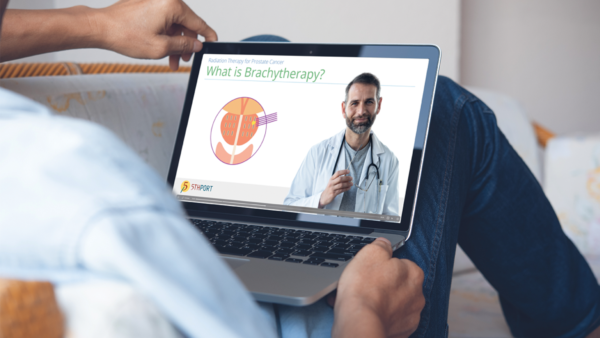
Thanks to the integration of artificial intelligence (AI) avatars and voice technologies, the landscape of patient education is undergoing a remarkable transformation. These advancements are not just futuristic concepts; they’re actively enhancing how patients receive and comprehend healthcare information today – or in other words, participating in their own health education.
What are AI Avatars?
AI Avatars are digital, human-like virtual assistants powered by artificial intelligence. They are designed to communicate with patients in a natural, engaging way, delivering healthcare information with consistency and clarity. Unlike traditional patient health education methods—such as pamphlets or static videos—AI Avatars can interact dynamically, answering common patient questions, demonstrating medical procedures, and adapting their messaging to suit individual learning styles.
By leveraging machine learning and natural language processing (NLP), these avatars are capable of providing personalized healthcare guidance that feels more human, helping to bridge the gap between medical professionals and patients in a scalable way.
An Example of How AI Avatars Work in Healthcare Education
A clinician records a short training video to capture voice, tone, and facial expressions.
AI generates a digital avatar that mirrors the clinician’s appearance and communication style.
Educational scripts are transformed into videos delivered by the avatar.
Content can be localized, translated, and updated without re-recording.
Patients receive consistent, on-demand education across digital touchpoints.
Is There Buy-In From the Healthcare Ecosystem?
Despite the promise of AI Avatars in healthcare, full adoption by physicians and insurance providers remains a work in progress. While the technology is highly advanced, the medical field operates on trust, accountability, and established protocols—none of which can be fully delegated to AI just yet. Physicians and insurers are still evaluating how AI-driven interactions fit into the broader patient care ecosystem. There are critical concerns around accuracy, liability, and patient safety, which means regulatory oversight and ethical frameworks need to catch up before AI avatars can be widely embraced as standalone patient educators.
What Are the Different Kinds of AI Avatars in Healthcare?
AI Avatars in healthcare come in various forms, each serving a unique purpose in improving patient health education and patient-provider engagement.
- Conversational AI Avatars
These avatars function like AI-powered chatbots but with the added benefit of a visual presence, mimicking human facial expressions and body language. Patients can interact with them via text or voice, asking questions about medications, procedures, or symptoms. (Cedars Sinai)
- Virtual Healthcare Educators
These avatars are pre-programmed to deliver structured educational content, such as step-by-step guides on pre- and post-surgical care or chronic disease management. They ensure that patients receive standardized, easy-to-understand information. (Mass General Brigham)
- AI-Driven Role-Playing Avatars for Training
In medical training, AI avatars are used to simulate patient interactions, helping doctors, nurses, and healthcare staff practice communication and diagnostic skills. They can portray different personas, including patients with varying symptoms, concerns, or cultural backgrounds. (NY Post)
- Emotionally Responsive AI Avatars
Some AI Avatars are equipped with emotion-detection technology, allowing them to adapt their tone and expressions based on a patient’s mood or stress levels. This helps create a more compassionate and supportive interaction, especially for patients dealing with anxiety or chronic illnesses.
How AI Avatars Improve Patient Health Education
- Personalized Assistance: Tailoring information to your specific health needs and preferences.
- On-Demand Availability: Offering support whenever you need it, without waiting for office hours.
- Consistent Information: Ensuring that the guidance you receive is accurate and uniform every time.
Healthcare Use Case: How-To Guide
While AI avatars are already transforming patient education, 5thPort enhances this experience by integrating advanced voice cloning and modulation technologies.
We recognize that how information is delivered matters just as much as what is being said. The tone, accent, and cadence of a voice can dramatically impact trust, comprehension, and emotional connection—especially in healthcare settings where patients may feel vulnerable or overwhelmed.
5thPort takes AI avatars beyond generic animations by allowing physicians to use their own face and voice—creating a truly personalized and trustworthy patient health education experience.
Step 1: Physician Records Their Voice and Video
- The doctor records a demo of their voice, testing for modulation, tone, pronunciation, and clarity to ensure it sounds natural and engaging.
- The physician also records video footage with a green screen behind them, capturing their facial expressions and natural speaking style.
Step 2: AI & Graphics Team Brings the Avatar to Life
- 5thPort’s video creation services team processes the recordings, creating an AI-powered video avatar that perfectly mirrors the physician’s voice, tone, and expressions.
- The script is reviewed and refined by the physician and nursing team (as applicable) to ensure accuracy and clarity before the final AI avatar is generated.
Step 3: Scalability & Video Translation Services Support
- Once the physician’s avatar is created using these video creation services, it can be used to generate multiple educational videos by typing in the words you would like the Avatar to say.
- AI-powered language adaptation enables the physician’s voice to use video translation services to be modulated into multiple languages, ensuring culturally appropriate and accessible communication for diverse patient communities.
The Result? Personalized, Scalable, and Culturally Adapted Patient Health Education.
- Patients hear their own physician’s voice and see their familiar face, reinforcing trust and comprehension.
- Providers can deliver consistent messaging across multiple topics without having to re-record content.
- Language adaptation ensures that communities receive healthcare information in a way that truly resonates with them.
By combining AI-driven voice and video cloning, 5thPort empowers healthcare providers to educate patients more effectively—at scale and with a personal touch.
For example, a Spanish-speaking patient may be more receptive to post-surgical care instructions if they are delivered in a voice that doesn’t just translate the words but also captures the intonation, pacing, and warmth of their native language. Instead of sounding robotic or unnatural, the AI avatar sounds like a real person from their community—improving both comprehension and trust.
The Future of Health Education is Now.
AI-powered avatars represent a scalable, patient-centered approach to health education by combining trusted clinician communication with the efficiency of artificial intelligence, helping healthcare organizations educate more patients without sacrificing clarity, empathy, or accuracy.
The integration of AI avatars and voice technologies is not just a glimpse into the future; it’s happening now. Read our involvement with a large hospital system’s radiation oncology department here, and how we transformed patient’s health education using this technology.
And, as these technologies continue to evolve, we can anticipate even more innovative applications that will further enhance the patient experience.
To schedule a demo or receive more information email us at Info@5thPort.Com.
This article is part #4 of a series by 5thPort exploring the transformative potential of video-based multimedia in healthcare. Stay tuned for part #5.